
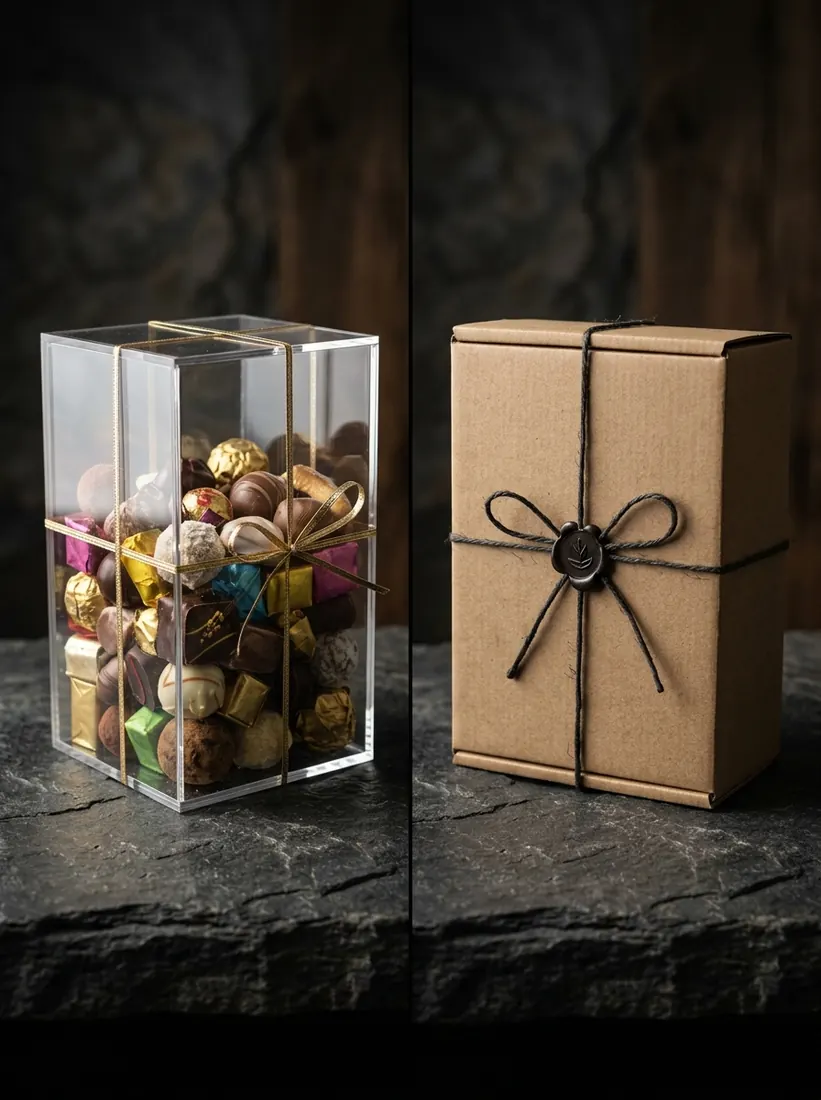
When you're choosing packaging for a gift in Pakistan, the decision usually comes down to two materials: acrylic or cardboard. Both can look beautiful, but they behave very differently in terms of cost, durability, and presentation. This guide compares them honestly, so you can pick the right one for your specific gift — not just the one that looks nicer in a photo.
Quick Comparison
| Factor | Acrylic | Cardboard |
|---|---|---|
| Durability | Rigid, holds shape permanently | Can dent or crush under pressure |
| Visibility | Clear or frosted — contents visible | Opaque — contents hidden |
| Cost | Higher, especially per piece | More affordable, especially in bulk |
| Reusability | Often kept and reused as a keepsake box | Usually discarded after opening |
| Customization | Engraving, printing, colored acrylic | Full-surface printing, easier branding |
| Best for | Premium gifting, nikah/wedding boxes, keepsakes | Bulk favors, budget-conscious gifting, branded packaging |
Durability: Which One Survives Transit Better?
Acrylic's rigidity is its biggest practical advantage — it doesn't bend, dent, or lose shape even when stacked or handled roughly during delivery. Cardboard, while sturdier than most people expect, can still crush at the corners or warp slightly if it gets damp. If your gift is being shipped a long distance or handled by multiple couriers before reaching the recipient, acrylic offers more peace of mind.
Presentation: Visible vs Hidden Contents
This is largely a matter of gifting style. A clear acrylic box immediately shows off what's inside — sweets, jewelry, or a carefully arranged favor — which creates an instant visual impact the moment it's handed over. Cardboard keeps the surprise until the box is opened, which some gift-givers actually prefer for occasions like birthdays or surprise announcements.
Cost: Where the Real Difference Lies
Cardboard is almost always the more budget-friendly option, especially for bulk orders like wedding favors or corporate giveaways, since it's printed and die-cut from flat sheets rather than fabricated piece by piece like acrylic. If you're ordering in very large quantities and cost per piece is the deciding factor, cardboard usually wins. For a detailed breakdown of what drives acrylic pricing specifically, see our Acrylic Gift Box Price Guide.
Which Should You Choose?
- Choose acrylic if the box itself is part of the gift's value — nikah boxes, keepsakes, jewelry, or anything meant to be reused or displayed.
- Choose cardboard if you're gifting in bulk, working with a tighter budget, or need heavy custom branding across the full surface of the box.
- Consider a mix — many event planners use acrylic for a few "hero" gifts and cardboard for general guest favors.
If you've decided acrylic is the right fit and just need help with sizing, our Acrylic Gift Box Size Guide covers exact dimensions for every size. For wedding-specific styling, see our Nikah Bid Box ideas.
Frequently Asked Questions
Does acrylic packaging protect gifts better than cardboard?
Generally yes for rigidity — acrylic holds its shape and resists crushing during transit far better than cardboard, which can dent or bend under pressure. However, acrylic is more prone to visible scratches, while a scuffed cardboard box is less noticeable. For fragile or delicate gifts, acrylic's rigidity is usually the safer choice.
Which is more affordable for bulk orders, acrylic or cardboard?
Cardboard is typically more affordable at bulk quantities since it's printed and die-cut from flat sheets, a faster process than acrylic fabrication. Acrylic remains pricier per piece even at volume, though the gap narrows somewhat with larger orders.
Can you see through an acrylic gift box?
Clear acrylic boxes are fully transparent, letting the gift be visible without opening the box. Frosted acrylic offers a softer, partially see-through finish. Cardboard boxes are opaque, so contents stay hidden until opened.
Is cardboard packaging considered less premium than acrylic?
Not necessarily — well-printed, sturdy cardboard with a good finish can still look premium. Acrylic tends to read as premium by default due to its glossy, rigid, see-through nature, but a thoughtfully designed cardboard box can close the gap significantly.