
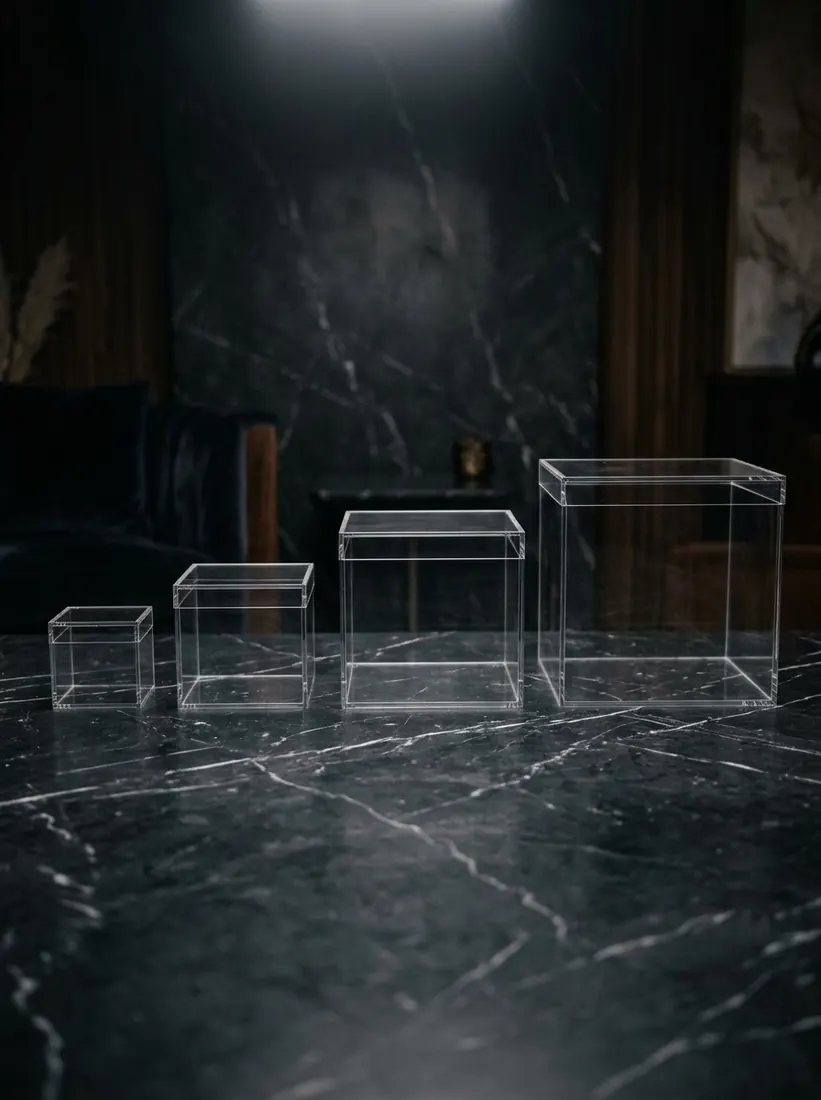
Choosing the wrong size is one of the most common (and most avoidable) mistakes when ordering an acrylic gift box. Too small, and your gift or sweets won't fit properly; too large, and contents shift around inside, looking sparse rather than generous. This guide walks through how to think about sizing before you order.
General Size Categories
| Size | Best For |
|---|---|
| Small | Single favors, individual keepsakes, small jewelry |
| Medium | Half-kilo mithai, standard personal gifting |
| Large | Full-kilo sweets, nikah/bid boxes, layered gifts |
| Extra Large | Combined hampers, mixed sweets and dry fruit, premium gifting |
How to Measure What You're Packing
Before choosing a size, it helps to physically lay out what you plan to place inside — sweets, jewelry box, or a small gift item — and roughly measure the footprint and height needed. Add a small margin (around half an inch on each side) so items aren't forced in tightly, which can scratch acrylic surfaces or make the lid difficult to close cleanly.
Sizing for Occasions
- Nikah/wedding bid boxes — typically Medium to Large, depending on mithai quantity per family. See our Nikah Bid Box ideas guide for styling alongside sizing.
- Baby announcement gifting — usually Medium, sized around sweets plus a small card or token.
- Corporate gifting — varies widely; see our Corporate Gifting Ideas for common configurations.
Does Size Affect Price?
Yes — larger boxes use more acrylic material, which is one of several factors driving cost. For a full explanation of acrylic pricing beyond just size, see our Acrylic Gift Box Price Guide.
Frequently Asked Questions
What size box holds 1kg of sweets?
This depends on the size and shape of individual pieces, since 1kg of small barfi takes up less space than larger, irregular mithai. As a general starting point, Large is typically the safer choice for a full kilo, with Extra Large recommended for layered or combined items.
Do bigger boxes cost proportionally more?
Not always exactly proportionally — larger boxes use more acrylic material, increasing cost, but cutting and finishing costs don't scale in a perfectly linear way. Always check current pricing per size on the product page rather than assuming a simple multiplier.
Should I measure the box in inches or centimeters?
Either works, but stay consistent when comparing across sellers, since some list dimensions in inches and others in centimeters. Converting to a single unit before comparing prevents accidentally choosing the wrong size.